ServiceNow in Manufacturing: Connected Frontline Workers
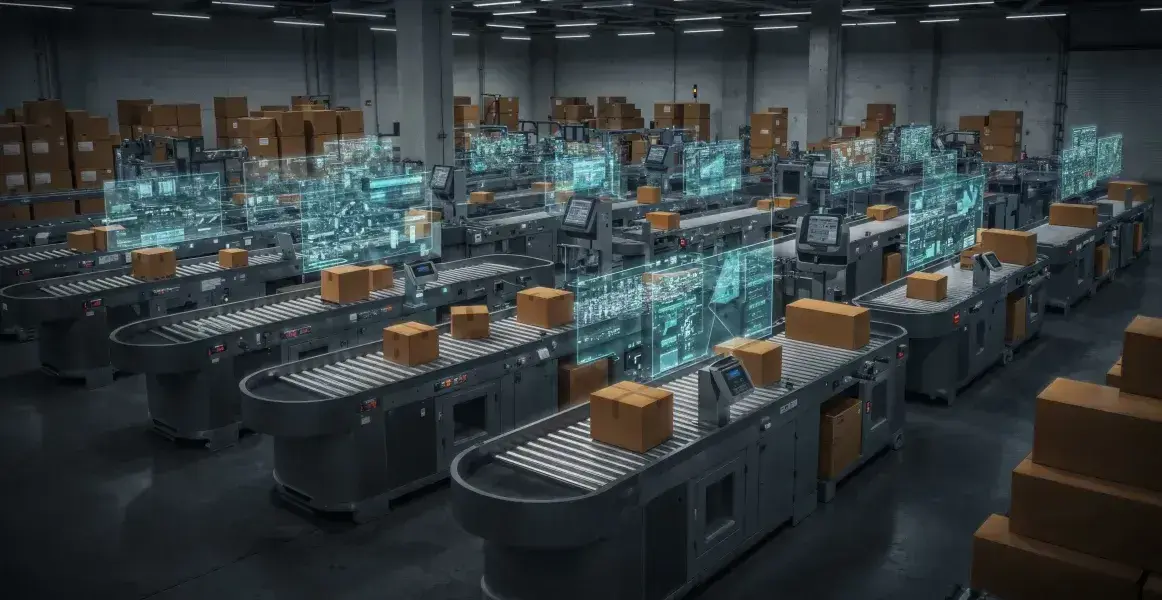
By 2030, the manufacturing industry is projected to face a shortage of 2.1 million skilled workers, with most of the gap driven not by a lack of applicants but by the accelerating loss of experienced talent and the institutional knowledge they leave behind.1
This is not a distant warning. It is already happening.
Experienced workers are retiring at a pace the industry has never seen before, and with them goes decades of hard-earned knowledge. The workers stepping in are capable and motivated, but they are being asked to operate increasingly complex systems with less time to train, fewer mentors to turn to, and more pressure to keep production running without interruption.
In too many plants, the tools they receive have not undergone significant changes in the past twenty years.
Clipboards. Radio calls. Printed work orders. Tribal knowledge passed down in hallway conversations. When something breaks, workers spend more time finding the right person or hunting down the right procedure than they do fixing the problem.
This is not a people failure. It is a systems failure.
The Gap Between the Factory Floor and the Rest of the Enterprise
Manufacturers have made significant investments in automation, connected equipment, and data infrastructure. But most of that investment has flowed into systems and machines, not to the people operating them.
A frontline technician on a typical shift is navigating real obstacles: work orders that do not reflect current conditions, asset histories locked away in systems they cannot access from the floor, and no structured way to escalate an issue or hand off context to the next shift without it getting lost somewhere along the way.
The result is a workforce that is constantly working around the system rather than through it. Good people doing hard work but fighting the friction of disconnected processes every single day.
Why This Is a Workflow Problem, not a People Problem
When production slows or quality issues creep in, the instinct is to look at the equipment or the process. But the real bottleneck is often much simpler: the right person did not have the right information at the right moment.
A technician can only resolve what they can clearly see. A supervisor cannot make a confident call without full context. A newer worker cannot perform like a veteran without access to the knowledge they spend years building.
The goal is not to burden frontline workers with more technology. It is to give them clarity, context, and a clear path to acting without the friction that slows everything down.
How ServiceNow Connects and Empowers Frontline Workers
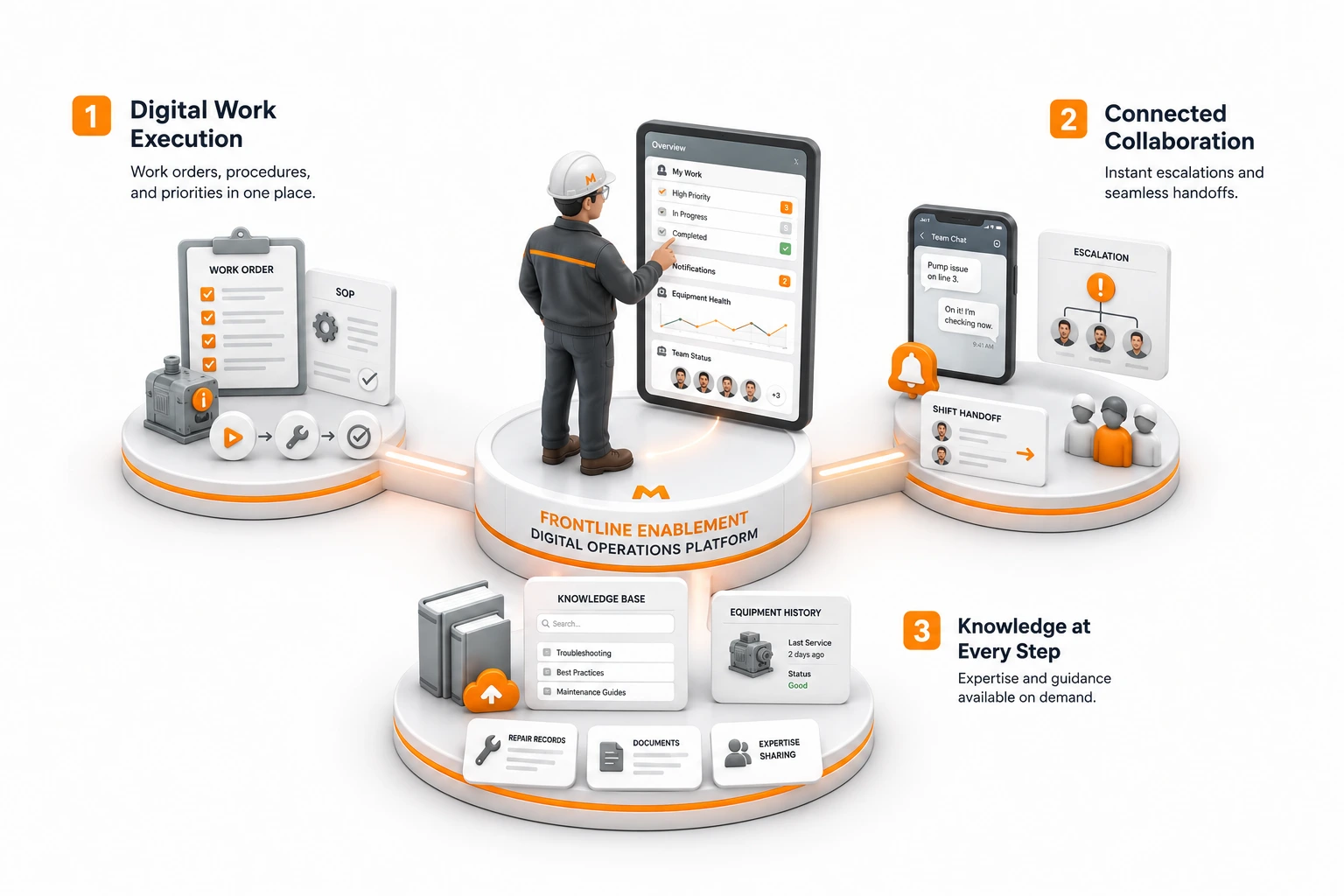
ServiceNow brings that same operational discipline to the people doing the work.
Work orders arrive digitally, with asset context, step-by-step procedures, and priority guidance already built in. Workers know what needs to happen, in what order, and why. Less time figuring it out. More time getting it done.
When something unexpected comes up, escalation happens inside the platform. The right people are notified, context travels with the issue, and nothing falls through the cracks between a radio call and an unanswered email. Shift handoffs follow the same principle: structured, documented, and complete so the incoming team hits the ground running instead of spending the first hour catching up.
ServiceNow also serves as a living knowledge base on the floor. Procedures, equipment history, repair records, and accumulated expertise are accessible in the moment workers need them. For newer employees, it shortens the learning curve significantly. For operations leaders, this means that institutional knowledge is no longer lost every time a veteran retires.
The outcome is a workforce that is faster, more confident, and more resilient, not because people have been replaced, but because they are finally supported the way they deserve to be.
The Bottom Line
The future of manufacturing will not be built by technology alone. It will be built by people who have the tools, the information, and the workflows to do their best work every day.
Connecting frontline workers is not just a productivity initiative. It is how you protect operational continuity, retain institutional knowledge, and build the kind of resilient workforce that can adapt when conditions change.
ServiceNow provides the platform to make that possible.
This was Part 3 of the series. Next, we will explore Supply Chain Responsiveness and why the ability to sense, adapt, and act across the extended supply chain has become one of manufacturing's most critical operational capabilities.
- Deloitte and The Manufacturing Institute, The Manufacturing Skills Gap in the United States, 2018 (updated projections widely cited through 2024).


Other Popular Articles
In the digital age, businesses must adopt an ad
GRC is the capability, or integrated collection
Get the latest insights straight from our desk to your inbox.
Other Featured Articles
Explore More
How to Design Custom Chatbots That Cannot “Make Stuff Up”
Confident AI answers without traceable sources create institutional risk. Learn how Grounded RAG architecture retrieves real documents first and attaches verifiable citations to every response.
Data and AI Solutions Group
Marketing Group view
How Citation-Backed Conversational AI Improves Public Access and Internal Decision-Making
AI without source citations creates real liability. Learn how citation-backed AI brings traceable sources, version awareness, and audit-ready outputs to every institutional decision.
Data and AI Solutions Group
Marketing Group view
OT Ransomware Prevention: Practical Best Practices for Industrial Cybersecurity
Explore enterprise grade OT ransomware prevention strategies, including segmentation, identity control, threat informed detection, and resilient recovery design to protect industrial operations fro
Cybersecurity Solutions Group
Marketing Group view
10 Myths About OT/ICS Security That Put Your Business at Risk
Think your OT network is secure? Learn the 10 most dangerous myths about OT and ICS cybersecurity that leave industrial operations exposed to attacks.
Cybersecurity Solutions Group
Marketing Group view
OT Ransomware Risks and Response for Industrial Systems
Learn why OT environments face higher ransomware risk, how attackers gain access, and how effective detection and response reduce operational impact.
Cybersecurity Solutions Group
Marketing Group view
AI Risk Assessment: Risk Types, Best Practices & More
Explore AI risk types, essential assessment frameworks, and proven best practices to mitigate threats in AI deployment. Learn actionable strategies for secure AI systems today.
Cybersecurity Solutions Group
Marketing Group view
AI Risk Assessment: Everything You Need to Know
Learn essential processes, methodologies, risk types, regulatory requirements, and practical implementation strategies for safe AI deployment.
Cybersecurity Solutions Group
Marketing Group view
Whitepaper: Ransomware Threat Management
Ransomware continues to be a real threat to business operations across all industries, no organization is safe from this threat.
Laszlo S. Gonc
CISSP, First Senior Fellow, DivIHN Cybersecurity Center of Excellence view
Cybersecurity Incident Response Preparedness
An incident response framework provides a structure to support incident response operations. A framework typically provides guidance on what needs to be done, but not on how it is done.
Laszlo S. Gonc
CISSP, First Senior Fellow, DivIHN Cybersecurity Center of Excellence view
IoT Medical Device Cybersecurity
Healthcare data and medical devices would be aggressively targeted by ransomware attacks since early 2017 has proven to be true