How to Design Custom Chatbots That Cannot “Make Stuff Up”
Contributors

Most AI chatbots fail in the exact places where organizations need them most.
Legal teams cannot rely on answers that cite imaginary statutes. Engineering teams cannot act on fabricated runbook steps. Compliance teams cannot accept explanations without traceable sources.
Yet many generative AI (GenAI) systems still behave this way. They produce confident answers even when the underlying information does not exist in the system’s knowledge base.
This problem is not a prompt issue. It is an architecture issue.
The solution is Grounded Retrieval-Augmented Generation (RAG) designed for traceability and verification. When implemented correctly, RAG forces every answer to come from real documents. The system retrieves source text first. Then it generates an answer that references those sources.
The result is a chatbot that behaves less like a guessing engine and more like a research assistant.
Why Traditional Chatbots Hallucinate
Large language models generate text by predicting the next token. They do not verify facts against a database unless the architecture forces them to do so.
A typical chatbot pipeline looks like this:
- User asks a question
- The model generates an answer
- The system optionally retrieves documents afterward
That approach invites hallucinations. The model already formed an answer before seeing the source material.
Grounded RAG flips the order.
- Retrieve relevant documents first
- Constrain the model to those documents
- Generate an answer with citations
This shift creates a fundamental change in reliability. The model stops inventing and starts synthesizing.
Core Design Principle: Retrieval Before Generation
In accuracy-critical environments, the retrieval layer determines the quality of the answer.
A strong architecture includes three elements.
Hybrid Retrieval
Semantic search alone often fails with structured documents like laws, policies, or engineering specifications. Keyword search alone misses contextual meaning.
Hybrid retrieval combines both.
- Semantic embeddings capture conceptual similarity
- Keyword search ensures precise phrase matching
- Ranking logic merges both signals
This approach drastically improves recall and precision.
For example, a legal query referencing a statute might rely on exact language like:
“15 ILCS 5/10”
Semantic search might miss it. Keyword search captures it immediately.
Metadata Filtering
Many systems make costly mistakes. They search for the entire document corpus every time.
Real enterprise systems do not behave that way.
Metadata filters narrow the search space before retrieval begins. Filters can include:
- Jurisdiction
- Document type
- Publication date
- Version or amendment status
OData filters often handle this step in enterprise search pipelines.
Instead of searching thousands of documents, the system searches only the relevant subset. This improves both accuracy and performance.
Handling Real-World Data Messiness
Clean datasets exist in academic examples. Production systems rarely see them.
Documents contain inconsistent formatting, multiple naming conventions, and broken references.
A grounded RAG system must handle these variations.
Legal citations offer a perfect example. The same statute might appear in several formats:
- 15 ILCS 5/10
- 15-ILCS-5
- Illinois Compiled Statutes 15 ILCS 5/10
Without normalization logic, retrieval breaks.
Regex rules and parsing layers help standardize these inputs before indexing. The retrieval engine then recognizes each variation as the same reference.
This step often determines whether the system feels intelligent or unreliable.
Building an Audit Trail for Every Answer
Trust grows when users can verify what the system says.
Grounded systems attach source references directly to generated answers. These references may include:
- Statute citations
- Document section links
- Page or paragraph references
Users can open the source and confirm the answer instantly.
This design creates two benefits.
First, it reduces hallucinations because the model must use retrieved text.
Second, it builds user confidence because every claim remains traceable.
In regulated industries, this audit trail becomes essential.
Performance Lessons from Real Deployments
Production RAG systems must balance accuracy and speed. Several implementation practices help maintain stability.
- Batch Embedding Generation: Large document sets require embedding generation at scale. Batch processing reduces API overhead and speeds indexing.
- Retrieval Tuning: Vector search parameters influence recall and ranking quality. Adjusting top-k retrieval counts and re-ranking logic improves answer reliability.
- Managing Library Changes: AI frameworks evolve rapidly. Tools like LangChain update frequently, which can break pipelines if dependencies remain uncontrolled.
Stable deployments track version changes carefully and isolate critical components.
Operational discipline matters as much as model quality.
Where Grounded RAG Matters Most
This architecture becomes essential anywhere accuracy matters more than creativity.
Examples include:
- Legal research systems: Users need statute citations and exact language.
- Compliance assistants: Responses must reference regulatory text.
- Engineering knowledge systems: Runbooks and troubleshooting steps must match documented procedures.
- Product documentation assistants: Answers must reflect the latest specifications.
- Customer support knowledge bases: Responses must link back to official documentation.
In each case, the chatbot acts as an interface to structured knowledge rather than a standalone reasoning engine.
The Future of Reliable Enterprise Knowledge Chatbots
Generative AI captured attention through creativity. Enterprise adoption will depend on reliability.
Organizations need systems that:
- Retrieve authoritative information
- Generate explanations grounded in real text
- Provide verifiable citations
- Maintain consistent performance
Grounded RAG architectures deliver exactly that.
Instead of asking users to trust AI blindly, they allow users to see the evidence behind every answer.
That shift transforms chatbots from experimental tools into dependable knowledge systems.
Explore These Concepts in Action
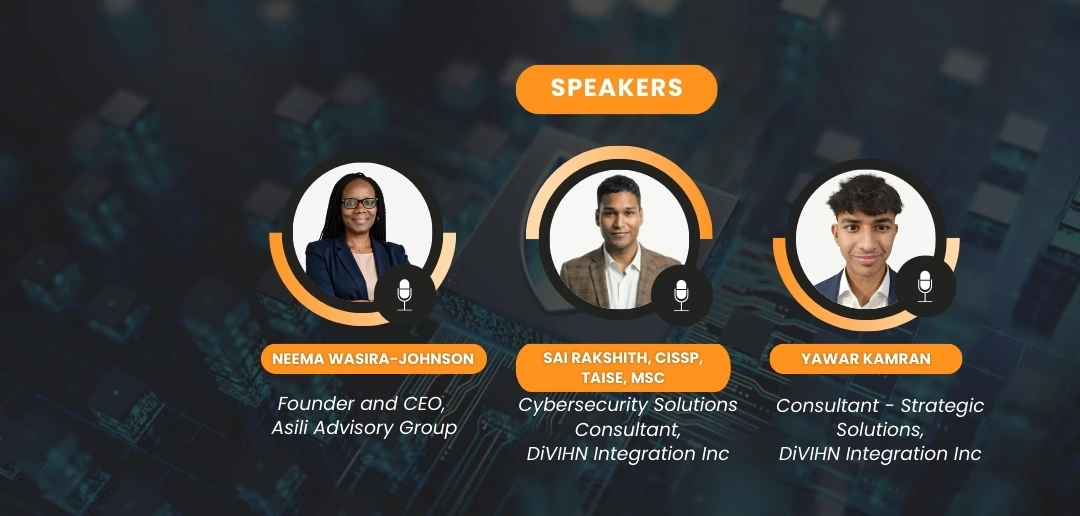
Discover how conversational AI is transforming legal research and analysis. Learn practical strategies for building reliable AI systems that provide verifiable, traceable answers.
Reserve Your Spot at Our Webinar:How Conversational AI Is Changing Legal Research and Analysis





Other Popular Articles
In the digital age, businesses must adopt an ad
GRC is the capability, or integrated collection
Get the latest insights straight from our desk to your inbox.
Other Featured Articles
Explore More
How to Design Custom Chatbots That Cannot “Make Stuff Up”
Confident AI answers without traceable sources create institutional risk. Learn how Grounded RAG architecture retrieves real documents first and attaches verifiable citations to every response.
Data and AI Solutions Group
Marketing Group view
How Citation-Backed Conversational AI Improves Public Access and Internal Decision-Making
AI without source citations creates real liability. Learn how citation-backed AI brings traceable sources, version awareness, and audit-ready outputs to every institutional decision.
Data and AI Solutions Group
Marketing Group view
OT Ransomware Prevention: Practical Best Practices for Industrial Cybersecurity
Explore enterprise grade OT ransomware prevention strategies, including segmentation, identity control, threat informed detection, and resilient recovery design to protect industrial operations fro
Cybersecurity Solutions Group
Marketing Group view
10 Myths About OT/ICS Security That Put Your Business at Risk
Think your OT network is secure? Learn the 10 most dangerous myths about OT and ICS cybersecurity that leave industrial operations exposed to attacks.
Cybersecurity Solutions Group
Marketing Group view
OT Ransomware Risks and Response for Industrial Systems
Learn why OT environments face higher ransomware risk, how attackers gain access, and how effective detection and response reduce operational impact.
Cybersecurity Solutions Group
Marketing Group view
AI Risk Assessment: Risk Types, Best Practices & More
Explore AI risk types, essential assessment frameworks, and proven best practices to mitigate threats in AI deployment. Learn actionable strategies for secure AI systems today.
Cybersecurity Solutions Group
Marketing Group view
AI Risk Assessment: Everything You Need to Know
Learn essential processes, methodologies, risk types, regulatory requirements, and practical implementation strategies for safe AI deployment.
Cybersecurity Solutions Group
Marketing Group view
Whitepaper: Ransomware Threat Management
Ransomware continues to be a real threat to business operations across all industries, no organization is safe from this threat.
Laszlo S. Gonc
CISSP, First Senior Fellow, DivIHN Cybersecurity Center of Excellence view
Cybersecurity Incident Response Preparedness
An incident response framework provides a structure to support incident response operations. A framework typically provides guidance on what needs to be done, but not on how it is done.
Laszlo S. Gonc
CISSP, First Senior Fellow, DivIHN Cybersecurity Center of Excellence view
IoT Medical Device Cybersecurity
Healthcare data and medical devices would be aggressively targeted by ransomware attacks since early 2017 has proven to be true