
Today's businesses work in a world that is defined by changing cyberthreats, more stringent laws, rising stakeholder expectations, and the quick uptake of cloud and artificial intelligence technology. Managing these issues calls for a cohesive strategy rather than discrete governance policies, risk evaluations, or compliance checklists. This is where Governance, Risk and Compliance (GRC) comes in.
Today, we’ll understand what GRC is, how it operates, why it is important in 2026, and the best practices, tools, and frameworks that organizations can employ to create a successful GRC program.
What is GRC?
Governance, Risk and Compliance (GRC) is a strategic corporate approach that uses a single framework to help firms manage uncertain circumstances, make well-informed decisions, and meet regulatory obligations through a single, integrated structure. Thus, to increase operational effectiveness, bolster resilience, and promote long-term business goals, GRC unifies risk control, governance, and compliance rather than treating them as distinct functions.
GRC is becoming a crucial component of today's corporate operations as firms deal with more complicated cybersecurity threats, changing regulations, AI governance issues, and stakeholder expectations. In addition to lowering risk and ensuring compliance, a clearly established GRC strategy enhances accountability, transparency, and the capacity to react with certainty to changing business circumstances.
Evolution of GRC: From Concept to Practice
The Open Compliance and Ethics Group (OCEG) created the term GRC (Governance, Risk, and Compliance) in the early 2000s in an effort to offer a unified framework for governance, risk management, and compliance. The "father" of GRC, Michael Rasmussen, was instrumental in popularizing the idea and promoting its use across industries. Later, OCEG developed the GRC Capability Model ("Red Book"), one of the most well-known frameworks for Governance, Risk, and Compliance, which helped to broaden the field.
Every global business engages in good governance, risk management, and compliance practices (GRC), even though many people are unaware of the value and meaning of GRC. In an official or informal setting, OCEG has stated, “GRC is not a recently developed concept”.
Let’s begin by discussing this anecdote to comprehend the rationale behind Mr Rasmussen and OCEG’s decision to merge these three words into a single acronym that has gained widespread reputation over the years.
In 2001, Fortune magazine honoured “America’s Most Innovative Company” for the sixth year in a row as one of the most successful corporations in the United States. The dot-com era had just reached its zenith; consequently, most investors and regulators were accustomed to the new normal of unusually high share prices. This, in conjunction with the lax regulatory climate of the period, allowed the CEO to be “creative,” enabling him to conceal hazardous assets and losses through a scheme that also involved the chief financial officer, other executives, and even the company’s auditor.
In December 2001, Enron declared bankruptcy. In the years preceding the company's demise, staff lost billions of dollars in pension payouts, while shareholders lost an estimated $74 billion. Significant financial and social repercussions for workers, business associates, and other stakeholders resulted from the scandal, which also caused the audit company Arthur Andersen to fail and many jobs to be lost. At the time, Enron's collapse was the largest corporate bankruptcy in U.S. history.
Even though Mr Rasmussen had a broad vision for GRC version 1.0, the Sarbanes-Oxley Act of 2002 (SOX), adopted as a direct response to the Enron scandal, was the focus of every organisation in the financial sector at that time. GRC 1.0 became, in essence, the recipe for managing your firm in a manner that complies with the SOX internal control criteria.
The 3 Components of GRC
To understand GRC more comprehensively, let’s examine each of its three core components.
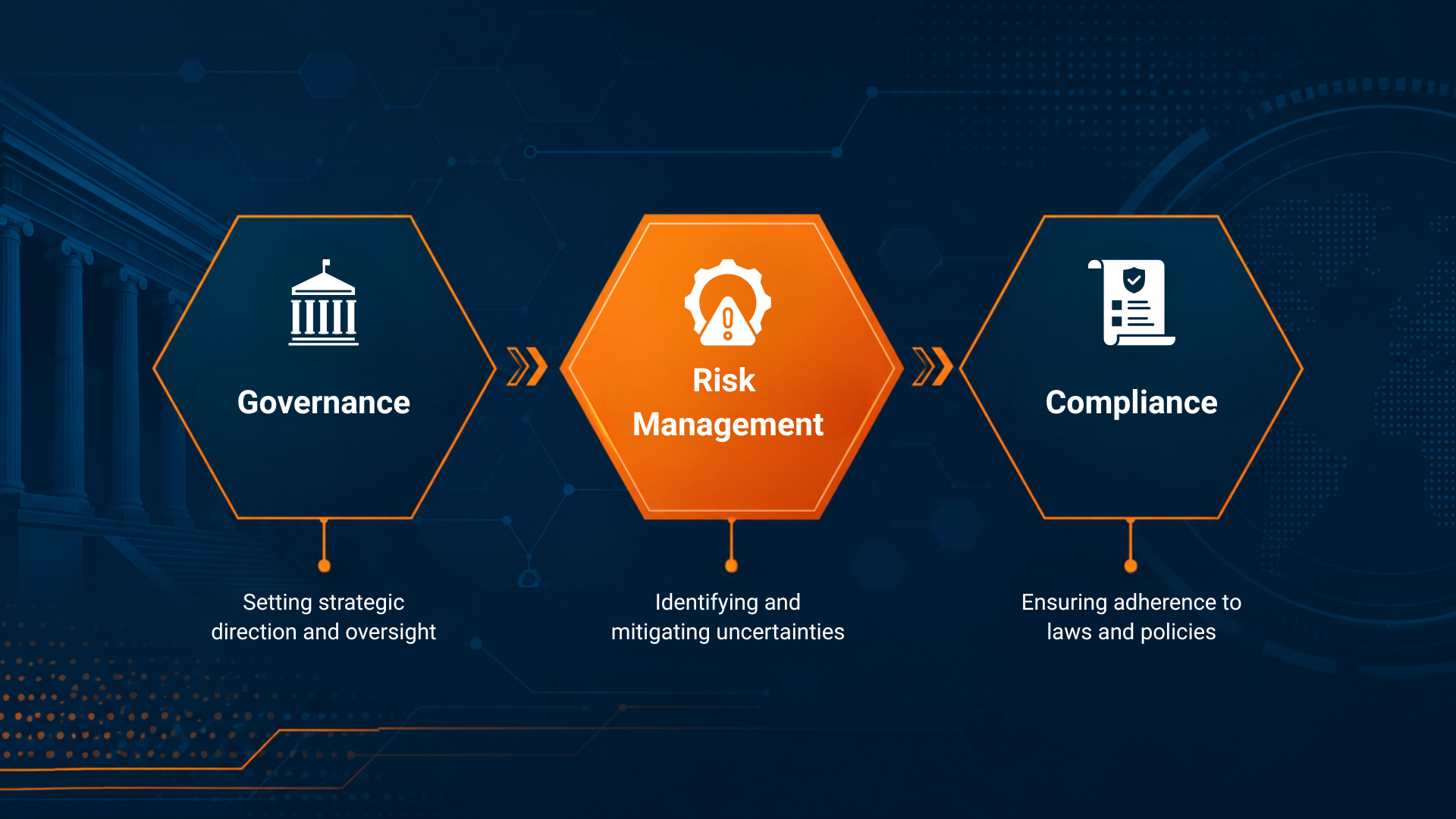
Governance: Governance is a term that refers to a collection of guiding principles, policies, and procedures that determine how an organization works towards achieving its objectives. It creates the foundation for responsible management, accountability, judgment, and strategic supervision, guaranteeing that corporate objectives are in line with legal requirements. When it comes to implementation, it takes a top-down approach, involving board members, senior management, and other key decision-makers.
Beyond corporate supervision, governance in 2026 will encompass data governance, cybersecurity governance, AI governance, ESG initiatives, and digital resilience. A GRC program makes it easier to access pertinent metrics by facilitating the steps of data presentation, internal auditing, reporting, and risk assessment.
Risk Management: Identifying, analyzing, and taking preventive measures against potential risks is referred to as risk management. Cybersecurity risk, legal risk, financial risk, operational risk, contractual risk, third-party risk, and risks arising from natural disasters and business disruptions are examples of the many types of risks organizations face.
As businesses continue to adopt cloud computing, artificial intelligence, and networked supply chains, managing risks has changed from a recurring evaluation to an ongoing activity. Continuous analysis, automated risk assessments, and centralized monitoring are all features of modern GRC platforms that assist businesses in spotting new risks before they affect operations.
Compliance: You, as a business, will have to act with integrity by following the statutory government regulations that are particular to your industry. In order to preserve confidence and minimize legal and financial risk, firms must adhere to internal company rules, industry standards, contractual duties, and customer expectations in addition to regulatory compliance.
You can keep track of regulations, industry standards, internal policies, and compliance requirements more efficiently with an effective compliance program. Organizations can streamline compliance management while lowering human labor and enhancing audit readiness with the use of automated workflows, ongoing compliance monitoring, centralized evidence gathering, and frequent internal audits.
Key Difference Between ERM VS GRC
| Category | Enterprise Risk Management (ERM) | Governance, Risk & Compliance (GRC) |
|---|---|---|
| Primary Focus | Focuses on the big picture. | Focuses on structure and execution. |
| Purpose | Identifies, assesses, and manages risks that could impact the achievement of business objectives and overall value. | Ensures risks are managed within the framework of governance policies and regulatory compliance. |
| Scope | Enterprise-wide view that covers strategic, operational, financial, and external risks across all business areas. | Focuses on governance frameworks, risk management practices, and compliance requirements. |
| Approach | Forward-looking and strategic. Helps organizations anticipate uncertainty and make informed decisions. | Rule-based and structured. Emphasizes policies, controls, and adherence to regulations and standards. |
| Key Outcome | Stronger resilience, better decision-making, and long-term value creation. | Regulatory compliance, risk mitigation, and operational accountability. |
| Time Horizon | Long-term and strategic. | Ongoing and continuous, with continuous monitoring, risk management, and regulatory compliance. |
How Governance Risk and Compliance Work?
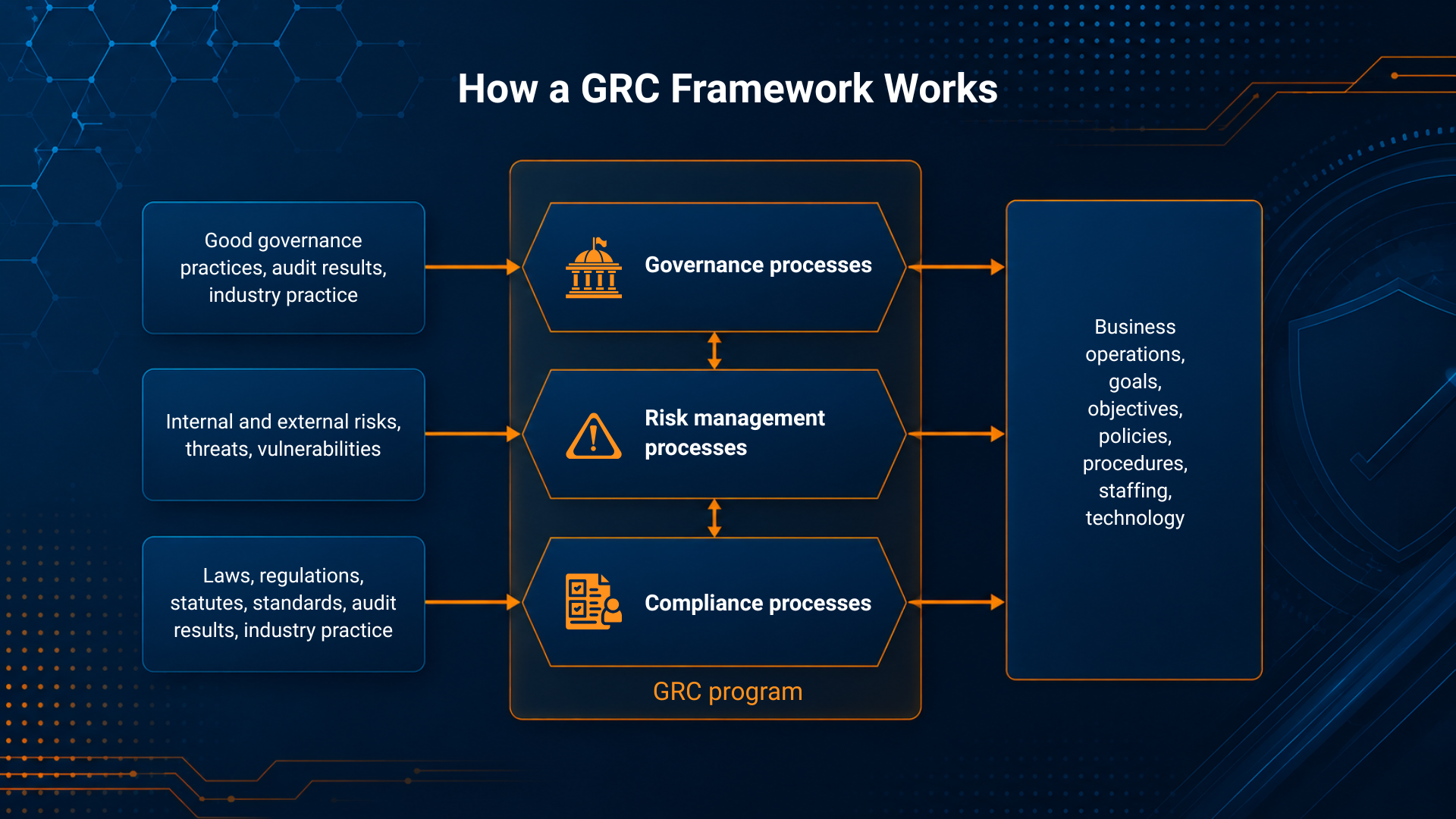
To help firms manage uncertainty, make well-informed decisions, and comply with regulations, GRC integrates governance, risk management, and compliance into a single operational model.
1. Establish Governance
An organization's policies, goals, and guiding principles for decision-making are established by governance. To establish accountability, enhance transparency, and guarantee that leadership choices are in line with corporate goals, it integrates audit findings, strategic corporate objectives, and best practices for governance.
Key Activities:
- Define organizational policies and governance standards.
- Establish business objectives and accountability
- Monitor performance through audits and reporting
- Support strategic decision-making
2. Identify and Manage Risks
Identification, evaluation, and mitigation of risks that may have an impact on corporate operations are the main goals of risk management. To assist firms in lowering their overall risk exposure, it regularly assesses both internal and external threats, such as cybersecurity, operational, monetary, third-party, and technological advancement risks.
Key Activities:
- Identify and assess business risks
- Prioritize risks based on business impact
- Implement mitigation and business continuity strategies
- Continuously monitor emerging threats and vulnerabilities
3. Maintain Regulatory Compliance
Compliance guarantees that company operations follow relevant laws, industry rules, contractual requirements, and internal standards. Organizations may uphold compliance while lowering legal, financial, and reputational risks through ongoing monitoring, automated controls, frequent audits, and credible evidence gathering.
Key Activities:
- Monitor regulatory and policy requirements
- Conduct compliance assessments and internal audits
- Maintain documentation and audit evidence
- Automate compliance tracking and reporting
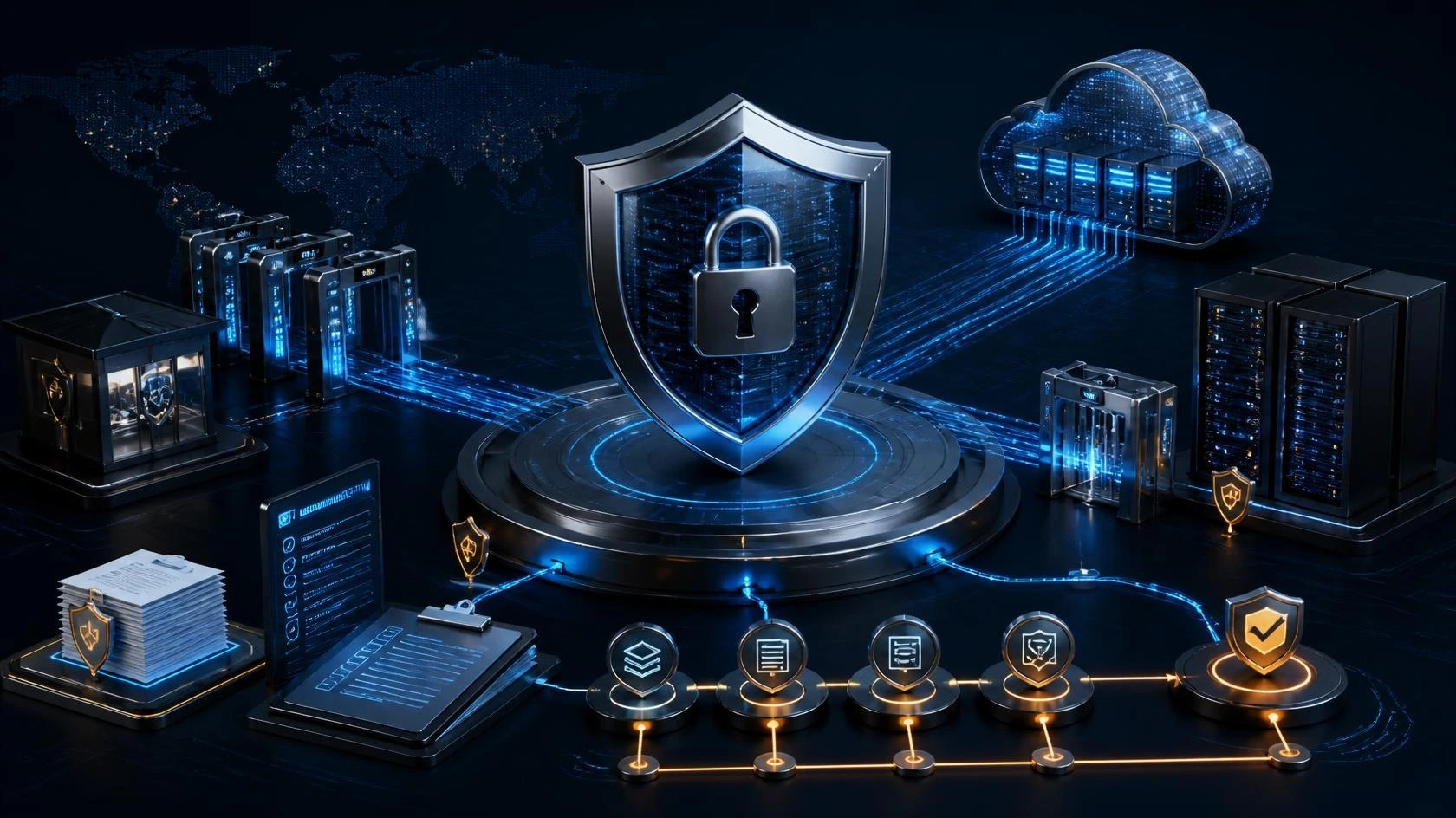
How a GRC Framework Works
How to Build Governance Risk and Compliance Program
Building a successful GRC program requires a structured, organization-wide approach that aligns governance, risk management, and compliance with strategic business objectives.
Key Stakeholder Management
Collaboration between departments that practice governance, risk management, and regulatory compliance is necessary for GRC, which necessitates cross-functional working relationships. An effective GRC Framework program begins with identifying important stakeholders and clearly outlining their roles and duties to improve teamwork, accountability, and decision-making skills.
- Senior Level Executives responsible for making strategic decisions after risk assessment.
- Legal professionals who help in preparing and mitigating legal implications.
- Financial experts responsible for statutory compliance.
- The HR function manages critical and confidential information.
- IT function takes care of cybersecurity and cybersecurity resilience.
GRC Framework
A GRC framework is a paradigm for managing an organization's governance and compliance risks. Choose a GRC framework that is appropriate for your organization's domain, regulatory requirements, business objectives, and risk profile.
It entails the process of defining the essential policies that can push the firm toward the goals that it has set for itself. You may take a proactive approach to managing risks, make well-informed decisions, and guarantee business continuity if you adopt a GRC framework. This enables you to take advantage of the many benefits of using such a framework.
Companies put in place GRC by adopting GRC frameworks, which include essential policies that align with the organization's strategic objectives. Organizations should also create clear ownership, record responsibilities, and put in place concrete controls to guarantee the framework is implemented consistently.
When formulating company policies, organising processes, and exercising governance over the business, key stakeholders base their work on a shared understanding derived from the GRC framework. This shared governance paradigm fosters interdepartmental collaboration, openness, and accountability.
Companies can use specialized software and other resources to coordinate and keep track of the progress made using the GRC framework. Modern GRC technologies make adoption easier by automating operations, centralizing risk and compliance data, producing real-time reporting, and enabling continuous monitoring.
GRC Maturity
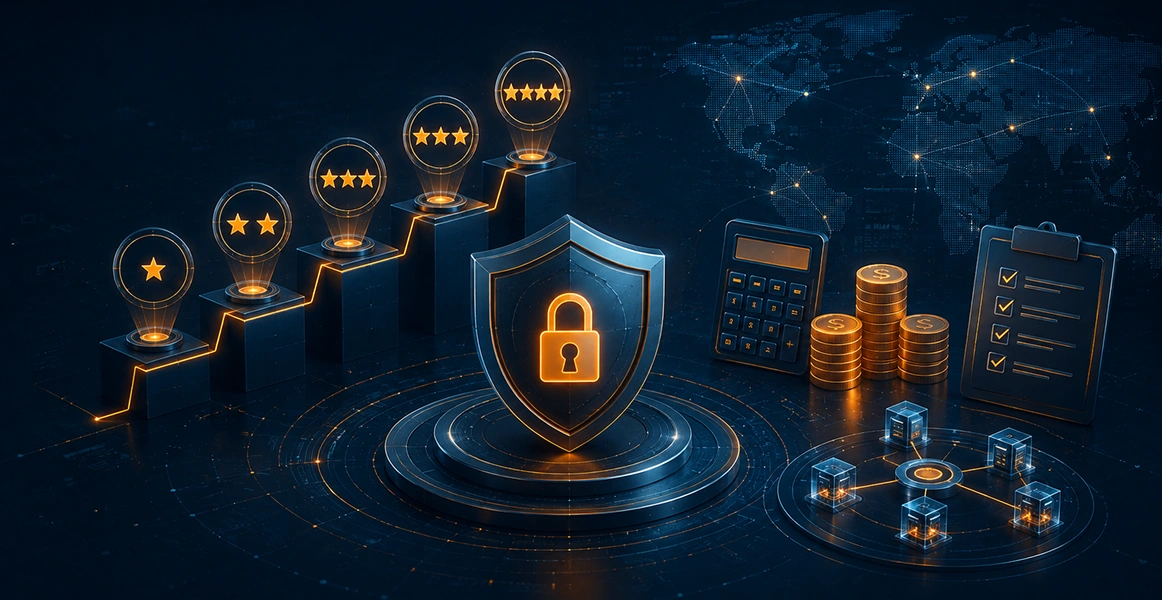
An organization's level of GRC maturity can be defined as the degree to which it has successfully integrated governance, risk assessment, and compliance. Measuring GRC maturity allows firms to assess the success of their regulatory structure, risk management procedures, and compliance actions over time.
You have reached a high degree of GRC maturity when implementing a well-planned GRC strategy yields positive cost efficiency, productivity, and the efficacy of risk mitigation. Mature GRC solutions also provide for speedier decision-making, increased operational resilience, higher regulatory readiness levels, and greater organizational flexibility.
On the other hand, a low level of GRC maturity is inefficient and causes business units to continue functioning in isolation. Organizations should constantly analyze, optimize, and adjust their GRC programs to accommodate new threats, changing regulations, and shifting business priorities.
Common GRC Challenges in 2026
1. Keeping Up with Evolving Regulations
Regulatory requirements are constantly changing across industries, and firms must comply with several regional and international standards at the same time. Manually tracking these changes might result in compliance gaps, greater audit efforts, and elevated regulatory risks.
2. Managing Cybersecurity and Third-Party Risks
As businesses expand their digital networks, cyber threats and third-party vendor-related risks increase. Businesses may experience operational problems, data breaches, and supply chain risks if risk management and vendor oversight are not ongoing.
3. Eliminating Organizational Silos
Many firms still manage governance, risk management, and compliance through different divisions with disparate tools and methods. This lack of connection reduces visibility, hinders decision-making, and causes duplication across teams.
Risk data is frequently scattered across several business units, making it difficult for management to acquire a holistic understanding of corporate risk. A lack of consolidated reporting can slow risk detection and prevent prompt decision-making.
5. Balancing Compliance with Business Agility
Organizations must comply with a growing number of rules while also innovating and adapting to changing market conditions. Finding the correct balance between adherence to regulations and operational flexibility is still a big challenge for modern businesses.
Popular GRC Frameworks for Stronger Risk Management
NIST Cybersecurity Framework (CSF) 2.0
The NIST Cybersecurity Framework (CSF) 2.0 offers an organized method for locating, evaluating, and controlling cybersecurity threats within a company. It assists enterprises in enhancing cyber resilience while coordinating security measures with business goals. It is based on six fundamental functions: Govern, Identify, Protect, Detect, Respond, and Recover. It is equally beneficial for commercial enterprises looking for a risk-based approach to cybersecurity governance, despite being extensively used by government agencies and critical infrastructure sectors.
ISO/IEC 27001
The international standard for creating, implementing, maintaining, and continuously enhancing an Information Security Management System (ISMS) is ISO/IEC 27001:2022. Through methodical risk management, clearly defined security procedures, and ongoing development, it assists organizations in safeguarding sensitive data. Certification is generally accepted across industries globally and shows an organization's dedication to information security.
COBIT 2019
An IT management and governance framework called COBIT (Control Objectives for Information and Related Technologies) 2019 was created to match corporate objectives with technological investments. It helps businesses make better decisions, maximize IT performance, control risks, and guarantee regulatory compliance. Businesses looking for better governance over IT operations and digital evolution will find COBIT very helpful.
COSO Enterprise Risk Management (ERM)
Organizations may identify, evaluate, and manage risks that potentially impact their strategic and operational goals with the aid of the COSO Enterprise Risk Management (ERM) framework. COSO incorporates risk management into organizational governance, performance management, and business planning rather than handling risk as a separate function. It enhances organizational resilience and long-term value development while promoting well-informed decision-making.
PCI DSS 4.0.1
Organizations that hold, process, or transfer payment card information must adhere to security standards set forth in the Payment Card Industry Data Security Standard (PCI DSS) 4.0.1. Stronger authentication, ongoing security monitoring, risk management, and safe system configurations are the main ways that the framework protects cardholder data. Compliance improves customer confidence and data privacy while lowering payment fraud.
SOC 2
The SOC 2 auditing approach was developed by the American Institute of Certified Public Accountants (AICPA) to evaluate how companies protect customer data. While availability, processing integrity, confidentiality, and privacy are optional criteria that firms incorporate based on the extent of their services and client requirements, every SOC 2 evaluation contains the required Security Trust Services Criteria. SOC 2 compliance is especially important for SaaS providers, cloud service providers, and tech firms handling sensitive customer data.
HIPAA
To preserve the privacy, reliability, and accessibility of protected health information (PHI), healthcare providers, insurers, and their business partners must have administrative, physical, and technical measures in place. HIPAA compliance ensures privacy for patients and compliance with regulations while lowering security threats.
| Framework Name | Primary Focus | Core Elements & Components | Target Audience & Industries | Key Benefits |
|---|---|---|---|---|
| NIST Cybersecurity Framework (CSF) 2.0 | Information Security Management | Six Core Functions: Govern, Identify, Protect, Detect, Respond, Recover | Government, Critical Infrastructure, All Sectors | Strengthened cyber resilience and better business alignment |
| ISO/IEC 27001:2022 | Information Security Management System (ISMS) | Risk management, security controls, continuous improvement | International organizations, security-focused businesses, all industries | International recognition, systematic risk management |
| COBIT 2019 | Aligning IT with Business Goals | Governance objectives, risk management, protection controls, continuous management | Government, enterprises, critical industries | Improved IT governance, regulatory compliance, and cybersecurity management |
| COSO Enterprise Risk Management (ERM) | Enterprise Risk Management & Business Resilience | Enterprise risk management, governance, strategy, performance, resilience | Government, critical infrastructure, enterprises across industries | Improved resilience, strategic decision-making, and business alignment |
| PCI DSS 4.0.1 | Payment Card Security & Consumer Trust | Security controls, risk governance, compliance management | Organizations handling payment card data, financial services, merchants | Reduced fraud, stronger payment security, increased consumer trust |
| SOC 2 | Information Security Management | Risk management, security controls, compliance, continuous monitoring | SaaS providers, cloud service providers, technology companies | Increased customer trust, improved security posture, stronger compliance |
| HIPAA | Healthcare Information Security & Risk Management | Privacy Rule, Security Rule, administrative, physical, and technical safeguards | Healthcare providers, insurers, healthcare clearinghouses, business associates | Protected patient data, regulatory compliance, stronger cyber resilience |
Benefits of Governance, Risk & Compliance (GRC)
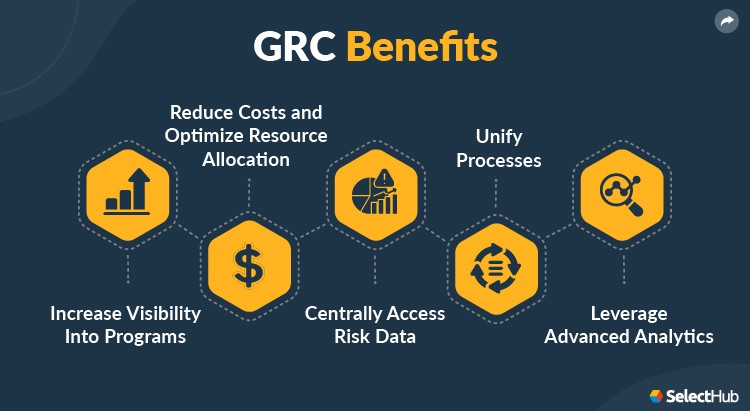
- Visibility – Thanks to GRC, which provides a unified framework for managing governance, risk, and compliance issues, you may find all your data in a single location. This, in turn, enables you to delve deeper into risk data and acquire contextual information on fundamental weaknesses. It is not enough to be aware of what is incorrect; GRC enables you to comprehend the modifications you need to implement into the three systems to forestall future problems. Gaining visibility into your organisation’s financial and operational health helps you to make real-time adjustments and benchmark key performance indicators (KPIs).
- Optimising Costs & Resources – The potential to save time and money is the key benefit of implementing a GRC programme in your organisation. As a result of the unification of these three processes, you will no longer be required to allocate resources distinctly for each unit. In addition, if you opt to go with GRC software, you can automate day-to-day processes. This will allow your personnel to spend more time on billable activities, ultimately increasing your revenue. You can even integrate chatbots and natural language processing (NLP) to build rules for responding to and dealing with risk situations without involving a natural person if you combine artificial intelligence (AI) and machine learning (ML).
- Centralised Access To Risk Data – Maintain a record of every piece of information about risks in a single database. You can view the data remotely, allowing you to respond to risk situations more quickly. For safety and privacy reasons, you may choose who can access the risk data and what devices can access it. A centralized repository also helps departments collaborate better by offering a single repository of truth for risk-related data. With real-time insight into risk data, companies can spot emerging threats more quickly, prioritize remediation activities, generate thorough reports, and make more accurate, data-driven choices, all while enhancing audit preparedness and overall risk governance.
- Process Unification - is one of the more understated benefits; you won’t notice it immediately, but it will pay dividends in the long run. A uniform process, taxonomy, and terminology are all things that can be established using GRC. Standardised methods simplify training new employees, evaluating and benchmarking performance, and ensuring that the platform continues to operate smoothly even when staff members leave or are replaced. Additionally, over time, it fosters a more risk-aware culture at work, ultimately reducing the number of risk-related occurrences. This increases the organisations’ ability to withstand risks and breaks down the functional and operational walls built up.
- Analytics - You are provided unrestricted access to the risk data, enabling you to go deeper into the information to unearth hidden insights that might have otherwise been missed owing to a lack of oversight. Additionally, integrated advanced analytics tools and reporting capabilities assist in analysing, sharing, and utilising risk information advantageous to the organisation and its customers.
What Will the Future of GRC Look Like?
1. AI-Powered Risk Intelligence
Artificial intelligence and predictive analytics are changing the way businesses detect, evaluate, and respond to hazards. AI-powered Governance Risk and Compliance tools can scan massive amounts of data, uncover emerging risk patterns, automate regular assessments, and give actionable insights to enable faster, data-driven decision-making.
2. Continuous Compliance
Organizations are shifting away from periodic compliance reviews and toward continual compliance monitoring. Automated control systems, rapid reporting, and consolidated evidence gathering enable firms to remain audit-ready while rapidly adjusting to changing regulatory requirements.
3. Cloud-Based and Scalable GRC Platforms
Cloud-native GRC solutions provide enterprises with more flexibility, scalability, and accessibility. Centralized solutions make risk management easier, automate operations, and allow teams in different locations to interact using real-time information.
Moving Ahead
Governance, Risk, and Compliance (GRC) has progressed from a statutory need to a strategic business competence that enables organizations to make informed decisions, manage organizational risks, and adapt to an increasingly complicated business landscape. Organizations may boost operational resilience, enhance regulatory readiness, and develop more confidence with clients, collaborators, and stakeholders by combining governance, risk control, and compliance into a single framework.
Are you looking to boost your organization's GRC strategy? Explore how a customized Governance, Risk, and Compliance strategy can help you improve visibility, decrease corporate risk, and streamline compliance while promoting long-term company success.
Concluding Remarks –Deploying a robust GRC framework is a tedious initiative. But If you partner with an expert partner like DivIHN Integration Inc., you do not have to worry about your ROI. To know more, please reach out to sgovilkar@divihn.com.