
The annual penetration test has become a ritual in manufacturing security programs. Schedule it in Q4, receive the report in Q1, spend Q2 debating which findings to remediate, close a few tickets before the next test rolls around. The cycle produces documentation. It does not reliably produce a more secure environment. Penetration Testing as a Service was built to break that cycle.
What PTaaS Actually Is
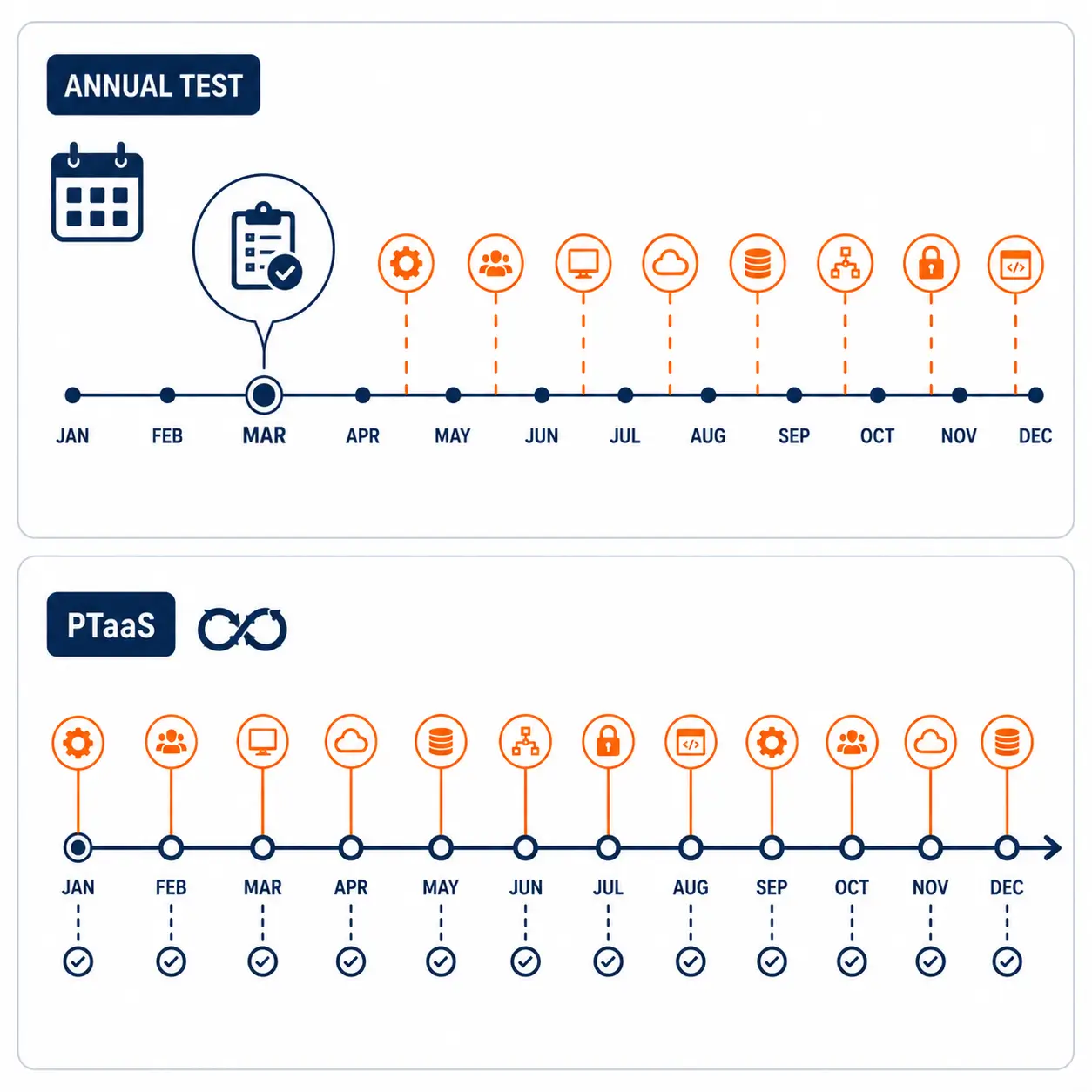
PTaaS is not a subscription to the same annual test delivered in smaller pieces. It is a fundamentally different model. Instead of a point-in-time snapshot of your security posture, PTaaS provides continuous or frequent testing tied to your actual change activity. New system deployed, new vendor connected, new remote access path opened. Each change gets tested close to when it happens, not twelve months later.
The delivery model also changes the relationship between the testing team and the organization. PTaaS engagements typically include a persistent connection to a testing platform, ongoing access to findings, and retesting capabilities so you can verify that a remediated finding is closed rather than just marked closed in a spreadsheet.
Why Annual Testing Fails Manufacturing Specifically
Manufacturing environments change constantly. New equipment comes onto the network. Vendors get remote access for commissioning or maintenance. OT systems get connected to enterprise platforms for data analytics. Each of these changes introduces potential exposure. An annual test captures the state of the environment on the day the testers show up, which may bear little resemblance to the environment that existed six months ago or will exist six months from now.
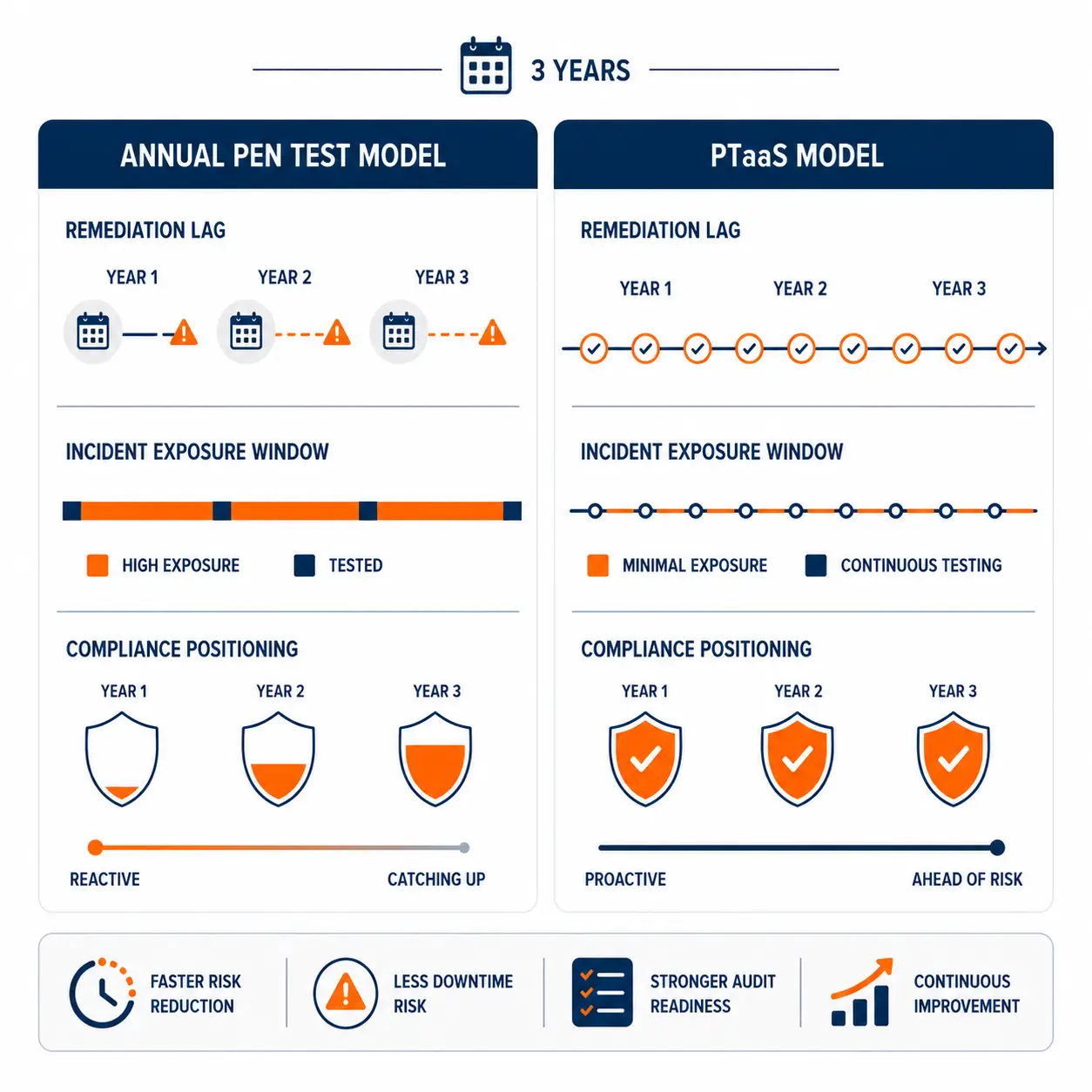
The remediation cycle compounds the problem. A typical annual pen test delivers findings in a report that takes weeks to review and prioritize. By the time remediation starts, the organization is already operating with known vulnerabilities. By the time the next annual test validates that remediation, another year has passed. In a high-change environment like manufacturing, that lag is not a minor inconvenience. It is a sustained window of unvalidated exposure.
How PTaaS Fits the Manufacturing Security Program
The natural integration point for PTaaS in manufacturing is the change management process. When a new OT system is commissioned, testing is triggered. When a vendor remote access path is opened, it gets tested before it becomes permanent. When a network segmentation change is made, the new boundary gets validated. Testing becomes part of how changes are completed, not an annual review of accumulated changes.
This integration also changes how security findings are handled. Instead of a report with forty findings that competes for remediation resources with every other IT project, PTaaS produces a smaller, more current set of findings tied to specific changes. The organization remediates as it goes rather than accumulating a backlog.
The Business Case
The cost comparison between PTaaS and annual pen testing is not simply about the price of the engagement. Annual pen testing has hidden costs: the remediation backlog that builds between tests, the cost of incidents that occur in the gap between discovery and fix, and the operational overhead of managing a large-findings report once a year rather than a smaller ongoing stream.
PTaaS also produces a defensible security posture for compliance purposes. Frameworks like CMMC and IEC 62443 are moving toward continuous validation rather than point-in-time assessment. An organization running PTaaS is better positioned for those requirements than one that produces an annual report and hopes the environment has not changed too much before the next test.
Is PTaaS Right for Your Program?
PTaaS delivers the most value in environments with high change activity, compliance requirements that reward continuous validation, and security teams that have the capacity to act on ongoing findings rather than a once-a-year report. It requires a different kind of organizational readiness than the annual test model.
Understanding whether your program is structured to benefit from PTaaS starts with an honest assessment of how your current testing model is working, where the gaps are and what your change activity looks like.