
IBM Sterling, Boomi, and Cleo are the three platforms mid-market to enterprise organizations most often evaluate EDI infrastructure. Each is mature and capable; the right choice depends on organization size, existing technology stack, and how much broader integration capability beyond EDI matters to the buyer. This comparison stays vendor-neutral, focused on practical differences rather than marketing positioning. Evaluating each platform against business requirements, integration scope, operating needs, and long-term goals helps organizations identify the strongest fit for their EDI environment.
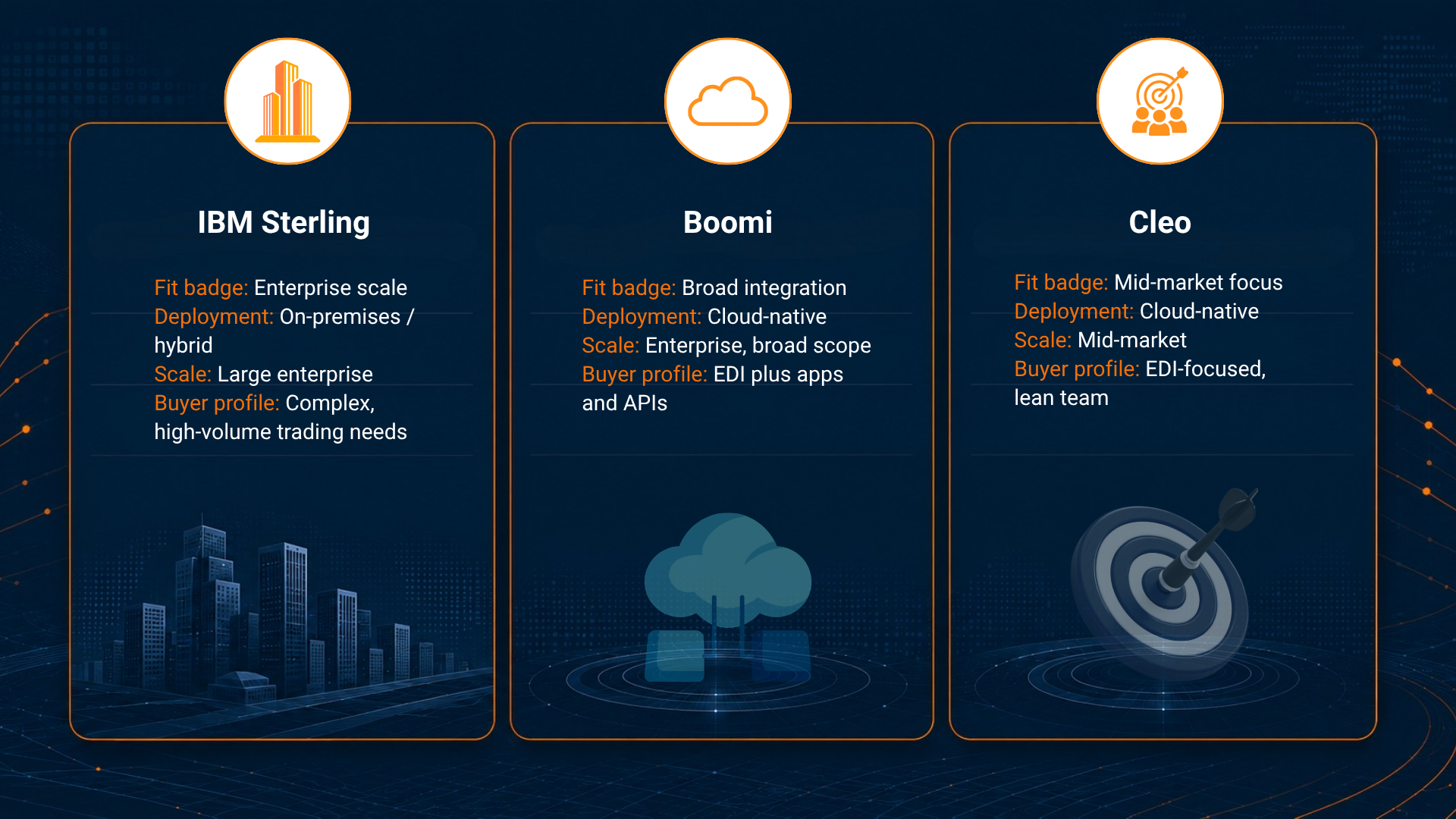
IBM Sterling: Enterprise Scale and Depth
IBM Sterling has a long-standing presence in enterprise B2B integration and supports organizations managing high transaction volumes and complex trading partner requirements. It supports an extensive range of standards and protocols natively, and its maturity shows in the depth of pre-built content and community knowledge available for troubleshooting.
That depth comes with real weight. Organizations evaluating Sterling should consider licensing, infrastructure, implementation, administration, and ongoing support as part of the platform's total cost of ownership. IBM has also been moving standard support toward defined end-of-life timelines for older Sterling versions, which makes platform version currency a genuine planning consideration for existing Sterling customers, not just a future buyer's decision.
Sterling's ecosystem of certified integrators and consultants is also broader than either Boomi's or Cleo's EDI-specific talent pool, simply due to how long the platform has been in the market. For an organization anticipating the need for specialized outside expertise periodically, that wider talent pool is a practical advantage independent of the platform's technical merits.
Boomi: Cloud-Native Integration Breadth
Boomi built its reputation as a broader integration platform, connecting applications, data, and APIs generally, with EDI as one capability within that wider platform rather than the sole focus. For organizations that need EDI alongside significant application and API integration work, that breadth means one platform can potentially cover both needs rather than running separate tools.
Boomi's cloud-native architecture generally means faster initial deployment and less infrastructure management burden than an on-premises Sterling implementation, which appeals to organizations wanting to minimize internal infrastructure responsibility. Organizations with primarily EDI-focused requirements should evaluate how Boomi's broader integration capabilities align with their planned use cases, operating model, and total cost of ownership.
Boomi's positioning also makes it a reasonable fit for organizations already invested in Boomi for other integration work, where adding EDI capability onto an existing platform relationship avoids introducing an entirely separate vendor and tool into the technology stack.
Organizations evaluating Boomi specifically for EDI should scrutinize the depth of its retail-specific trading partner content compared to a platform-built EDI-first, since breadth of general integration capability does not automatically translate into the same depth of pre-built retail compliance content that a specialist platform accumulates over time.
Cleo: Mid-Market Focus and EDI Specialization
Cleo has positioned itself specifically around mid-market EDI and B2B integration needs, with a platform built to be more approachable for organizations that do not have a large dedicated integration team. Cleo's onboarding tooling and trading partner management features are generally aimed at reducing the specialized expertise required to manage day-to-day EDI operations.
Cleo can be a strong candidate for organizations prioritizing EDI and B2B trading partner management. Buyers should evaluate its partner onboarding, operational tooling, integration capabilities, staffing requirements, and total cost of ownership against their specific environment.
Cleo's narrower focus relative to Boomi also tends to mean a shorter implementation timeline for organizations whose need really is EDI trading partner management specifically, without the additional configuration surface area that comes with a broader integration platform's wider feature set.
IBM Sterling vs Boomi vs Cleo: Side-by-Side Comparison
| Dimension | IBM Sterling | Boomi | Cleo |
|---|---|---|---|
| Best fit | Large enterprise, high transaction volume, complex trading partner requirements | Organization with substantial integration needs beyond EDI | Mid-market organization, EDI-focused need |
| Integration scope | EDI-first, deep protocol and standards coverage | Broad platform: applications, APIs, and data, with EDI as one capability | Focused specifically on EDI and B2B trading partner management |
| Deployment model | Primarily on-premises or hybrid | Cloud-native | Cloud-native |
| Implementation timeline | Longer, reflects platform depth and configuration surface | Moderate, depends on integration scope beyond EDI | Shorter, narrower scope and guided onboarding tooling |
| Admin expertise required | Higher, specialized administration for on-premises deployments | Moderate, less infrastructure burden than on-premises | Lower, built for teams without a large dedicated integration team |
| Cost positioning | Higher licensing and infrastructure cost | Priced for integration breadth, may exceed EDI-only needs | Lower cost, sized for mid-market EDI needs |
| Talent and ecosystem depth | Broadest certified integrator and consultant pool | Growing, tied to Boomi's general integration market presence | Narrower, EDI and B2B specialist pool |
| Version and lifecycle considerations | Standard support moving toward defined end-of-life timelines for older versions; version currency is an active planning item | Standard cloud-native update cycle | Standard cloud-native update cycle |
Making the Choice: Matching Platform to Organization Size and Complexity
Organization size and trading partner complexity are the two variables that should drive this decision more than any other factor.
| Organization profile | Better-served platform |
|---|---|
| Large enterprise, high transaction volume, complex trading partner requirements, existing infrastructure and staff for on-premises or hybrid deployment | Sterling, for its depth |
| Mid-market organization prioritizing manageable complexity and EDI-specific tooling | Cleo, for its focus |
| Organization with substantial integration needs beyond EDI, connecting internal applications and external APIs alongside trading partner exchange | Boomi, for its breadth |
A few final checks before committing to any of the three:
- Weigh migration costs and timelines, if replacing an existing platform. A poor-fit platform chosen for the wrong reasons often costs more to unwind and replace again than it would have cost to select correctly the first time.
- Request customer references at a similar size and complexity to your own, rather than relying solely on vendor-provided case studies. A platform's fit tends to become clearest through the experience of organizations facing genuinely comparable trading partner requirements.
Conclusion: Fit Beats Familiarity
Each platform brings a different combination of EDI depth, integration of breadth, deployment options, and operational capabilities. Organization size, integration scope, and trading partner complexity decide the fit far more reliably than brand reputation or feature checklists, and getting that assessment right before signing a multi-year agreement is worth more than any feature either vendor leads with in a sales conversation.