Methodology
Built Around Your Environment
Scope Shapes Everything
Scope determines what a test can find before a single command runs. Get it wrong, and the engagement answers the wrong question.
A well-scoped test maps to how an attacker actually moves through your environment, covering cloud infrastructure, identity providers, internal networks, APIs, and AI integrations. It starts with a clear picture of what you are protecting and works backward from there.
Testing That Follows Real Attack Chains
Attackers move through an environment in stages. Each phase below maps to how they actually operate, from the first probe outside your perimeter to the final impact inside it. Testing aligns to PTES, NIST SP 800-115, and the OWASP Web Security Testing Guide, with phases mapped to MITRE ATT&CK.
External
Entry
Foothold
Escalate
Impact
Each Attack Surface Demands Its Own Approach
Every attack surface has its own threat model. Each one has its own entry points, techniques, and blind spots. The sections below break down how we approach each one.
AI tools and agentic workflows operate with elevated trust attackers actively exploit. Prompt injection, tool abuse, and excessive agency let attackers reach data and execute actions your team never intended to expose. Most organizations have no visibility into where those boundaries sit.
- Prompt injection and jailbreaks
- Agent tool and action abuse
- Retrieval pipeline data leakage
- Excessive agency exploitation
- Plugin and integration hijacking
- Model endpoint and API exposure
- Prompt injection across all inputs
- Agent tool and action boundaries
- Plugin and integration trust review
- Retrieval pipeline data leakage


Mobile apps handle authentication, store sensitive data, and expose backend APIs attackers actively target. Insecure storage, weak authentication, and API abuse give attackers direct access to your systems.
- Insecure storage exposing user data
- Session bypass to hijack accounts
- Backend API abuse for data access
- Binary reverse for credential theft
- Runtime manipulation to bypass controls
- Sensitive data stored on device
- Authentication and session integrity
- Backend API access and authorization
- Binary protection and tampering risk
- Runtime behavior and control bypass
Web apps are one of the most targeted surfaces across enterprise environments. Business logic flaws, broken authorization, and API vulnerabilities give attackers access that automated scanners consistently miss.
- Broken access control
- OAuth token theft
- API abuse for data extraction
- Forged server requests
- Exposed shadow endpoints
- Access control per user role
- Authentication and sessions
- OWASP Top 10 and OWASP API Security Top 10
- Server-side request forgery
- Legacy and undocumented APIs


Cloud misconfigurations and overprivileged identities sit behind some of the most damaging enterprise breaches. A single exposed role or storage bucket gives attackers a path to your most critical systems.
- Overprivileged roles
- Public buckets exposing data
- Container abuse for pivoting
- SSO abuse to hijack identities
- Exposed secrets and API keys
- IAM privilege escalation paths
- Storage and serverless exposure
- Container and Kubernetes security
- Federation and SSO configuration
- Secret and key management gaps
Network infrastructure is where attackers move after gaining initial access. Misconfigurations, weak segmentation, and exposed services turn a single foothold into full environment access.
- Credential relay and replay
- Kerberoasting for account access
- Firewall rule exploitation
- DNS poisoning and hijacking
- Legacy protocol abuse
- Network segmentation validation
- Active Directory attack paths
- Firewall and ACL configuration
- DNS security and exposure
- Legacy protocol risk

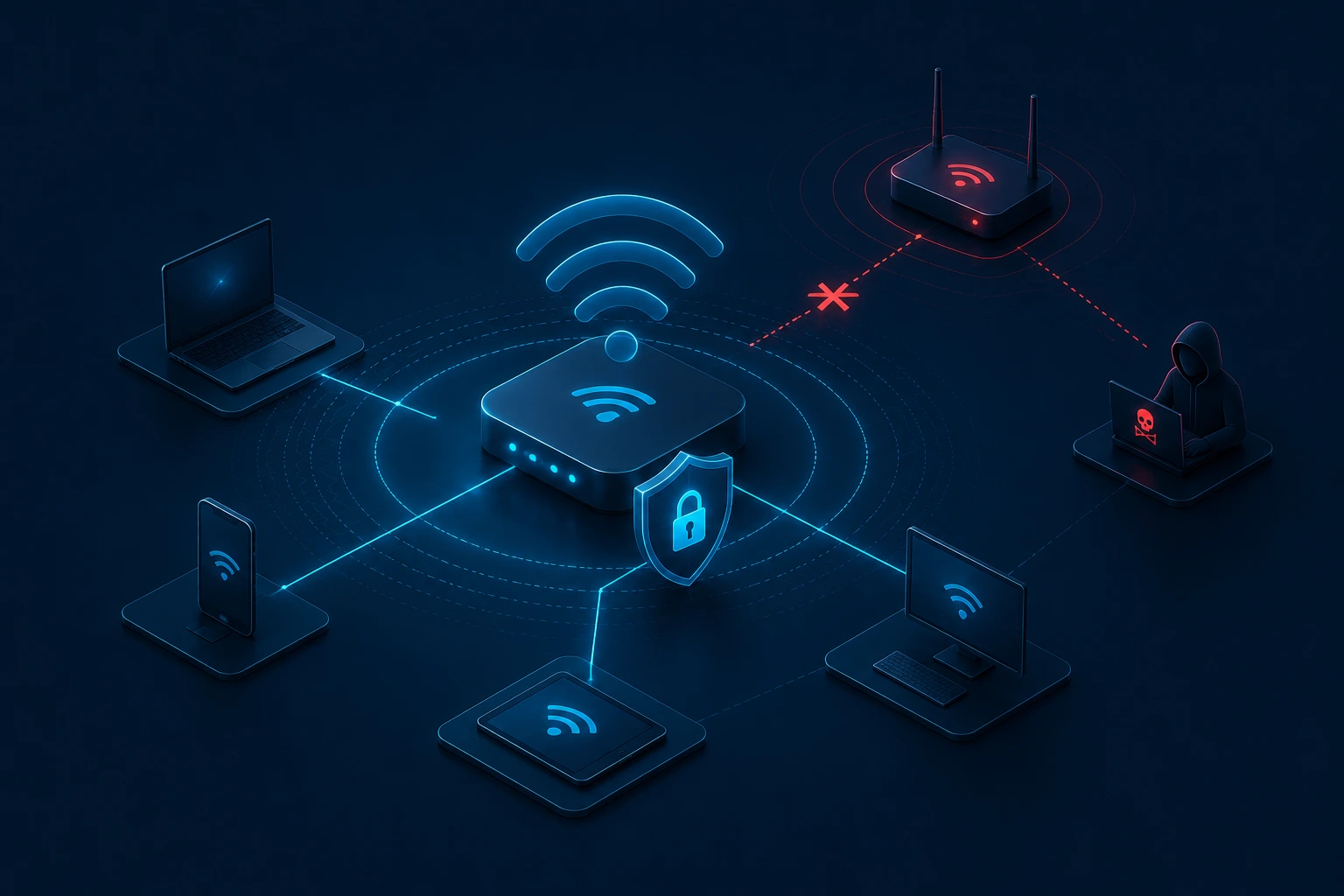
Wireless environments often run on configurations that predate the current threat landscape. Rogue access points, weak encryption, and misconfigured authentication are the entry points attackers look for first.
- Rogue access point deployment
- WPA2 cracking and WPA3 downgrade attacks
- Evil twin attacks on users
- PMKID and handshake capture
- Client deauthentication attacks
- Encryption and auth protocols
- Rogue access point detection
- Guest network segmentation
- Wireless client security
- Coverage and signal boundaries
Any unmanaged IoT device is a potential entry point your security team has no visibility into. Attackers target weak firmware, default credentials, and unencrypted communications to establish persistent footholds.
- Default credential exploitation
- Firmware extraction and analysis
- Unencrypted protocol abuse
- Device impersonation attacks
- Physical port exploitation
- Firmware and software security
- Default and weak credentials
- Network protocol encryption
- Device authentication controls
- Physical interface exposure


OT environments demand a different approach. Every assessment delivers advisory depth across industrial control systems, with uptime and safety as fixed constraints.
- IT to OT boundary crossing
- Remote access and vendor abuse
- Legacy protocol exploitation
- Engineering workstation pivot
- PLC and SCADA manipulation
- IT and OT segmentation review
- Remote access path exposure
- Legacy protocol and PLC risk
- Vendor and third party access
- IEC 62443 control alignment

Breach simulations often stop at the network. Skilled attackers walk through your front door, clone a badge, plug in a device, and reach systems your technical controls never anticipated protecting.
- Tailgating and piggybacking
- Badge and RFID cloning
- Hardware implant deployment
- Unlocked workstation access
- Physical server room access
- Physical access control gaps
- Badge and RFID security
- Hardware port exposure
- Workstation lock policies
- Facility security procedures
Your Threat Model Drives Our Test Model
The right model starts with your threat landscape, compliance requirements, and the outcomes that matter most.
 B
B G
G W
WEvery Scope Starts with What Matters Most to You
The scoping session maps your threat model, your crown jewels, and what you need to prove, before a single test runs.
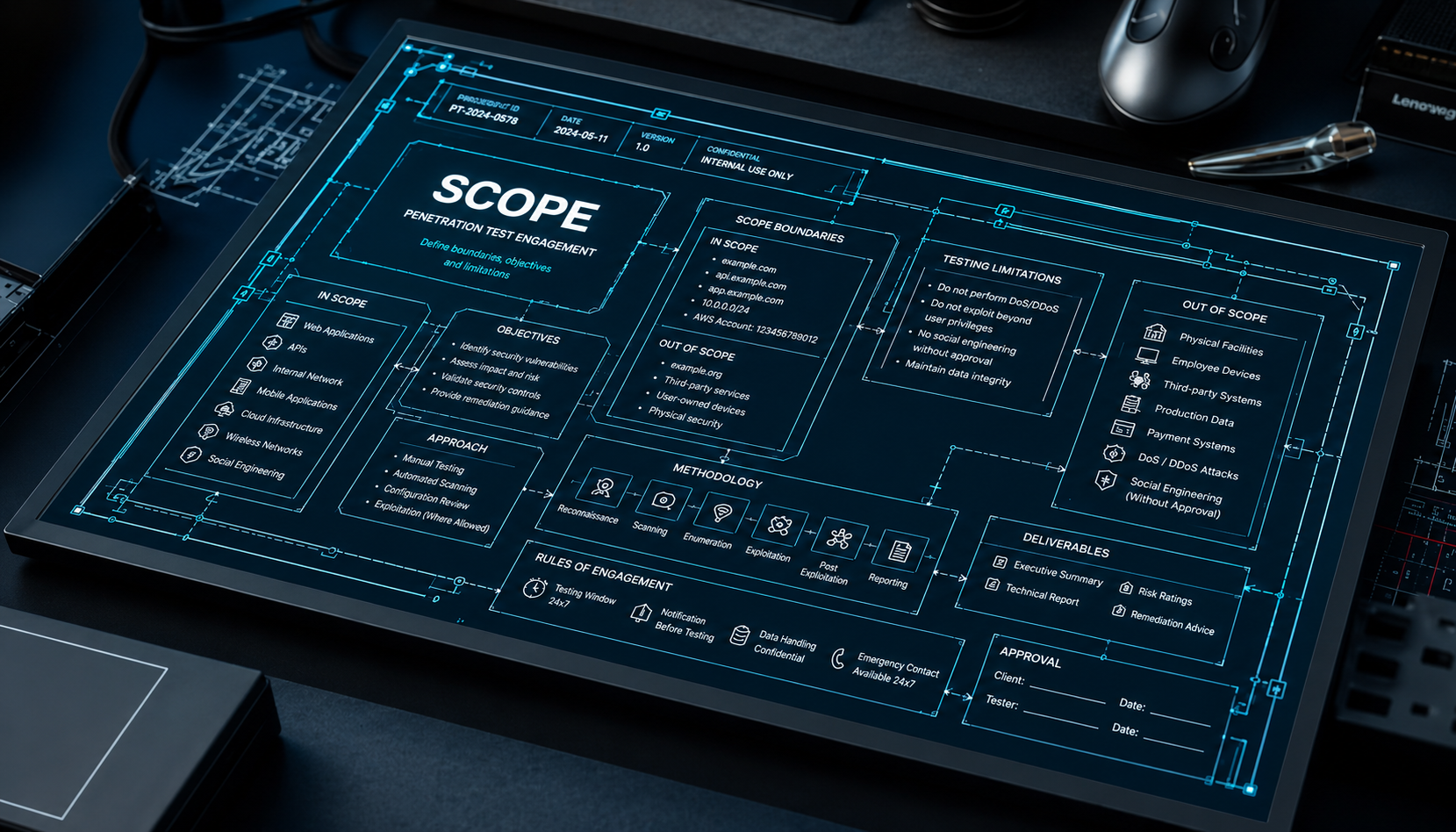
Our team maps every system, integration, and entry point before testing begins. We account for cloud infrastructure, identity providers, third-party connections, and AI integrations upfront.
Your team and ours identify what an attacker would target first. Customer data, financial systems, and privileged access paths anchor every engagement objective.
Both teams define timing, boundaries, communication channels, and escalation paths together. We document constraints first, including stop conditions, data handling rules, and out-of-bounds assets.
Both teams select black, gray, or white box based on your threat landscape and what the engagement needs to prove. Once aligned, both teams document the decision before testing begins.
Deeper Coverage Across More Surfaces
The most exploited gaps in enterprise environments are not technical vulnerabilities. They are the surfaces that never made it into the scope. We built our coverage around exactly those gaps.
Your people are part of your attack surface. Attackers exploit trust, urgency, and authority to bypass technical controls that would otherwise stop them cold.