Penetration Testing Services for Your Industry
Every organization runs on connected systems that attackers actively look for a way into, regardless of sector. Your business may need to protect customer data, financial records, intellectual property, or operational systems across internet-facing applications, cloud environments, remote access points, and internal networks. Our penetration testing services help you identify and validate exploitable security risks across your environment, giving your security and IT teams the insight they need to strengthen your defenses before an attacker finds the gap first.
Protecting Your Business Requires More Than Traditional Security Testing
Attackers no longer rely mainly on stolen passwords to break in. Vulnerability exploitation now accounts for 31% of data breaches, the first time in nearly two decades that it has overtaken credential theft as the leading way attackers gain access, according to Verizon's 2026 Data Breach Investigations Report.
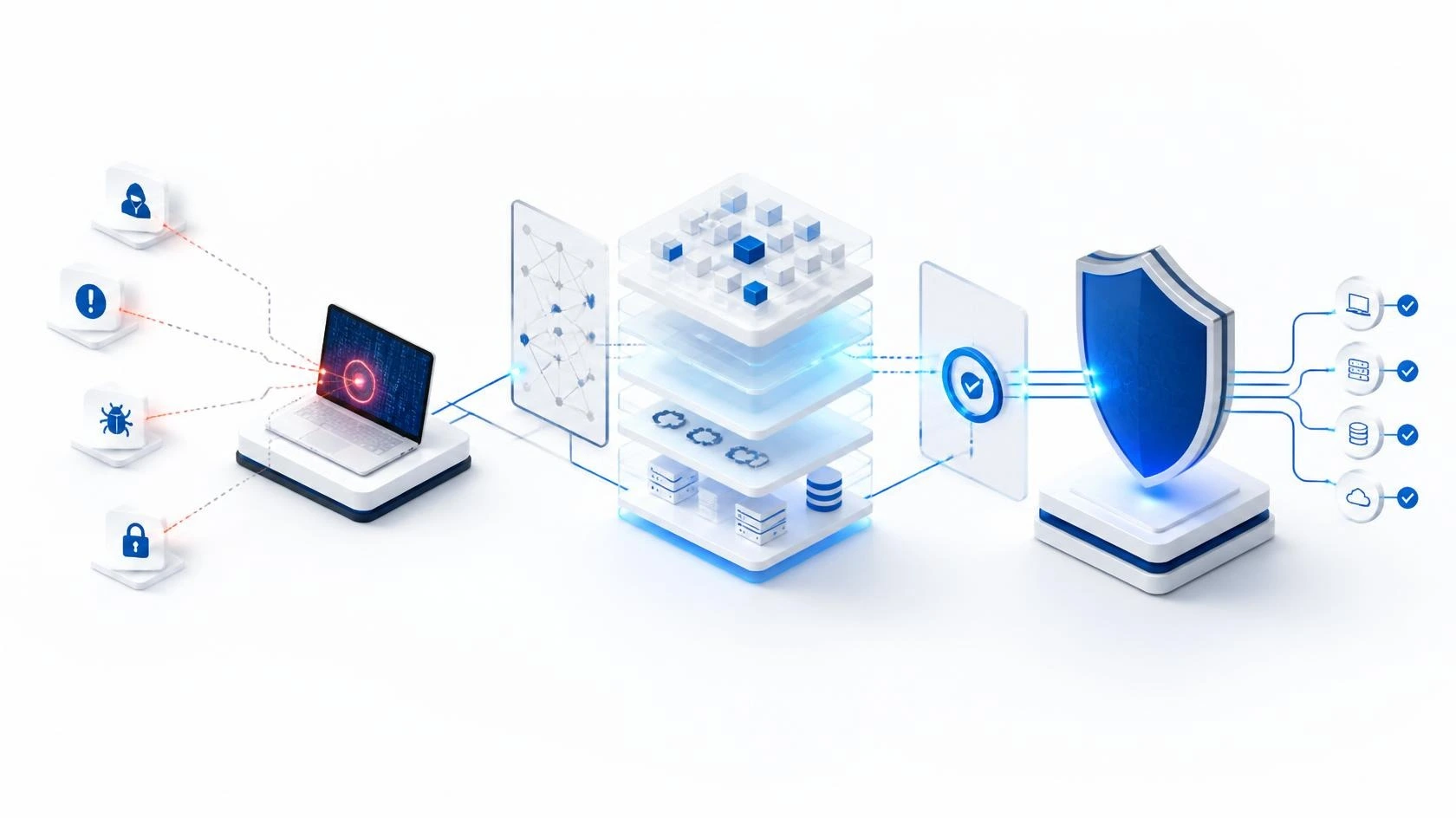
This shift means traditional vulnerability scanning alone may not give your team enough context to act. A penetration test validates whether an identified weakness can actually be exploited and shows how an attacker could move from that entry point toward your highest-value systems and data.
Secure the Systems That Keep Your Business Running

Protect Business-Critical Applications
We evaluate the applications, servers, and infrastructure your business depends on daily to identify vulnerabilities before they disrupt operations or expose sensitive data.

Assess Your Cloud and Digital Infrastructure
We review cloud environments, internal networks, and supporting infrastructure to identify security weaknesses across your organization's digital footprint.

Secure Third-Party and Vendor Connections
We validate the security of remote access, vendor integrations, and connected systems that could introduce risk into your environment from the outside in.

Prioritize Risks That Affect Your Operations
You receive actionable findings ranked by business impact, so your team can focus remediation efforts where they matter most to your organization.
Security Insights That Support Better Business Decisions

You'll understand which systems present the greatest business risk, allowing your security and IT teams to align remediation with your organization's priorities instead of treating every finding equally.

Every recommendation explains not only what to fix, but why it matters to your operations, your customers, and your organization's broader risk profile.

You leave the engagement with prioritized next steps, technical guidance, and the confidence to strengthen your security posture on your own timeline.
The Best Time to Find a Security Weakness Is Before an Attacker Does
Your environment changes constantly through new applications, vendor integrations, cloud adoption, and infrastructure updates. Each change can introduce new security exposure.
Schedule penetration testing before major technology deployments, mergers or acquisitions, vendor integrations, cloud migrations, or significant infrastructure changes. Testing at these points gives your team the opportunity to identify exploitable weaknesses and address them before they affect your business.

Common Questions About Penetration Testing
Why is penetration testing important for organizations outside specific regulated industries?
Every organization, regardless of sector, relies on connected applications, cloud environments, and internal systems to run its business. Penetration testing identifies exploitable security weaknesses before they can disrupt operations, expose sensitive data, or affect critical business processes.
Which assets should be prioritized during penetration testing?
Organizations typically prioritize internet-facing applications, customer portals, internal networks, cloud environments, and other business-critical systems. We tailor your final scope to your operational priorities and risk profile.
How is penetration testing planned for business operations?
We plan every engagement around your operational requirements and agreed rules of engagement. We coordinate testing activities to minimize disruption, with appropriate boundaries and stop points we define before testing begins.
Can both internal and external systems be included in scope?
Yes. Depending on your requirements, the engagement can assess external-facing systems, internal networks, cloud infrastructure, and connected applications. We define your scope during planning to align with your business objectives.
When is the best time to schedule a penetration test, and how can organizations get the most value from it?
The best time is before deploying new technology, expanding operations, introducing vendor integrations, migrating to the cloud, or implementing significant infrastructure changes. You get the greatest value when the assessment aligns with business priorities, you clearly define the scope, you involve key stakeholders early, and findings drive remediation rather than sit as a one-time exercise.
What security risks are most commonly found across industries?
Common findings include insecure remote access, exposed internet-facing applications, weak authentication controls, vulnerable APIs, cloud misconfigurations, third-party integration risks, and network segmentation issues.
How are security findings prioritized after testing?
We prioritize findings based on exploitability, business impact, and the criticality of the affected systems. This approach helps your team focus remediation efforts where they deliver the greatest value.
Can penetration testing help reduce business disruption from a security incident?
Yes. By identifying exploitable vulnerabilities before attackers do, penetration testing helps reduce the likelihood of incidents that could interrupt operations, damage customer trust, or create financial and reputational impact.
Can penetration testing help strengthen your supply chain and vendor security?
Yes. We test vendor portals, remote access pathways, third-party integrations, and internet-facing systems that could introduce risk through external connections.
What should our team prepare before a penetration testing engagement?
Your team should identify the systems to assess, define business priorities, nominate key technical contacts, and communicate any operational constraints that the testing team should consider during testing.
Who should be involved during a penetration testing engagement?
Successful engagements typically involve security teams, IT administrators, infrastructure owners, and application teams. Involving the right stakeholders helps streamline testing, validate findings, and accelerate remediation.
How long does a penetration testing engagement take?
The timeline depends on the number and complexity of systems in scope, the testing approach, and your operational constraints. We establish the engagement timeline during planning so we can coordinate testing, reporting, and stakeholder walkthroughs around your schedule.